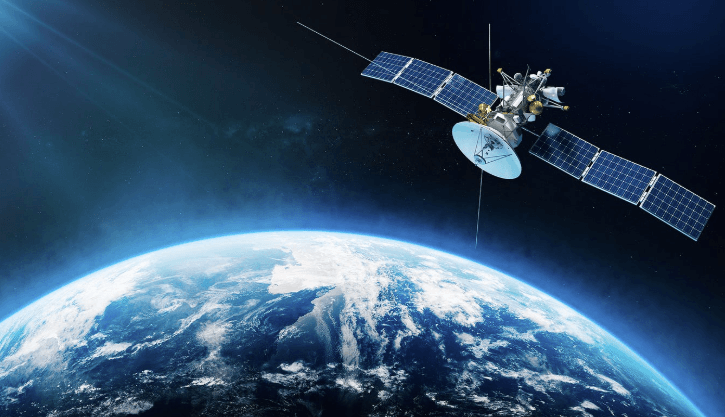
Satellites power communication by relaying signals between space and ground, creating wide-area coverage beyond terrestrial limits. Signals travel through uplinks, space segments, and downlinks, with link budgets, antenna gains, and power constraints shaping performance. Orbital architectures determine latency, footprint agility, and cross-link opportunities. Redundancy and propulsion influence reliability and reconfiguration during outages or demand shifts. The systemic design ties orbit evolution to propagation models, inviting further scrutiny of how topology and timing govern global connectivity.
How Satellites Enable Global Connectivity
Satellites enable global connectivity by providing, from orbit, wide-area communication links that transcend terrestrial constraints.
The system integrates orbital architectures, frequency allocation, and cross-link strategies to ensure continuity and coverage.
Satellite redundancy enhances resilience against component failures, while beam agility enables rapid reconfiguration of footprints to address demand shifts.
This holistic design pursues reliable, scalable, freedom-preserving networks.
From Orbit to Ground: the Transmission Path
Analytical assessment emphasizes orbit propagation dynamics, link budgeting constraints, and failure-aware resilience, ensuring transparent data flow despite environmental variability and system interdependencies.
Satellite Orbits and Network Architectures
How do orbital configurations and network topologies shape the capabilities and resilience of space-based communication systems? The analysis centers on orbital mechanics governing satellite positions, coverage, and handoffs, with network architectures balancing redundancy and throughput. Systemic evaluation assesses link budget constraints across varying altitudes and constellations, clarifying how topology choices influence continuity, resource allocation, and resilience against link outages and maneuver requirements.
See also: newsgigacom
Performance, Latency, and Reliability in Space Communications
Performance, latency, and reliability in space communications arise from the interplay between link budgets, propulsion- and geometry-driven link changes, and the stochasticity of inter-satellite and ground links. The analysis, rigorous and systemic, identifies latency implications as functions of orbital geometry, link handovers, and traffic patterns, while reliability tradeoffs emerge from adaptive coding, retransmission schemes, and cross-link diversity under varying environmental conditions.
Frequently Asked Questions
How Do Satellites Power Themselves in Orbit?
In orbiting solar arrays capture energy, while onboard systems manage battery capacity through rigorous management. The design emphasizes efficient power budgets, ensuring spacecraft survive eclipse periods and sustain critical functions, aligning with a systemic, freedom-seeking analytical perspective.
What Fuels Satellite Propulsion During Lifetime Operations?
Fuel options favor fuel-efficient propulsion; propulsion tradeoffs hinge on mission duration and thrust. It analyzes chemical vs electric choices for orbit insertion, noting propellant mass, efficiency, and lifecycle constraints shaping lifetime operations.
Do Solar Panels Degrade, and How Is It Mitigated?
Solar panels degrade over time due to radiation, thermal cycling, and micrometeoroid impacts; mitigation strategies include radiation-hardened materials, shielding, redundant arrays, periodic calibration, and robust attitude control, ensuring continued performance for allowed mission lifespans and freedom-driven operations.
How Is Satellite Energy Balanced With Payload Requirements?
Energy budgeting governs satellite power, balancing generator output, battery reserves, and payload demands; payload optimization reduces peak draw and memory latency, ensuring margins for science instruments. Like a tightrope walker, systems synchronize energy flow across subsystems with precision.
Can Satellites Operate in Eclipse or Deep-Space Conditions?
Yes, satellites can operate in in orbit eclipse and deep space operation, though power demands and thermal management differ. Systems adapt via conservative schedules, energy storage, and radiation-tolerant components, balancing reliability with mission flexibility for autonomous, freedom-seeking operations.
Conclusion
Satellites power communication by knitting a global grid of orbiting repeaters, each calibrated for precise timing, bandwidth, and beam steering. From orbit to ground, links dance through propagation delays, cross-links, and ground station handoffs, all governed by rigorously engineered budgets and redundancy. The system’s resilience hinges on propagation models, orbital geometry, and topology, not whim. In short, spaceborne infrastructure converts distant signals into near-instantaneous chatter—an elegant, if bureaucratic, symphony of photons and protocols. SatCom, precisely human, marvelously stubborn.